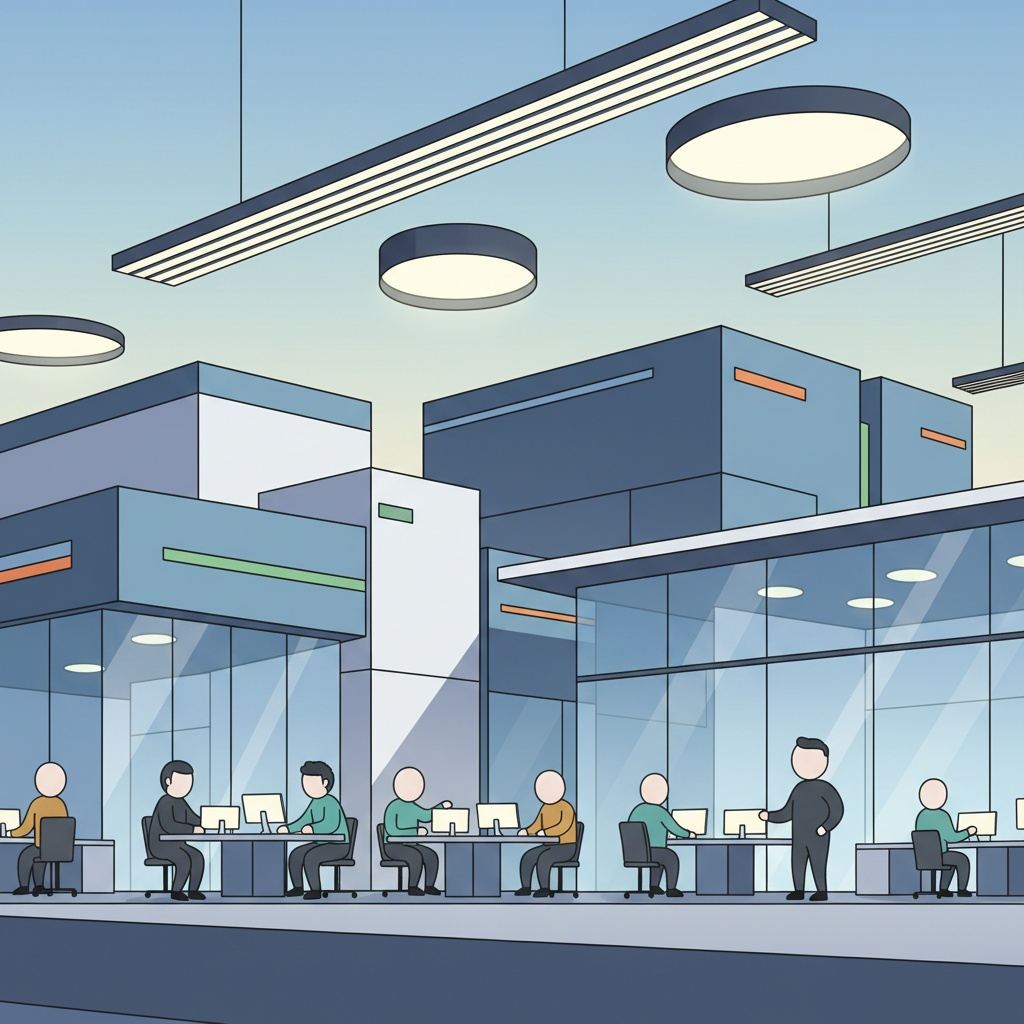
Flex industrial and R&D facility development in Sun Belt markets
Flex Industrial and R&D Facility Development in Sun Belt Markets: Your Strategic Growth Playbook
Reading time: 12 minutes
Ever wonder why major corporations and innovative startups alike are racing to plant their industrial flags across Sun Belt markets? The answer isn’t just about sunshine and lower taxes—it’s about strategic positioning in America’s fastest-growing economic corridor.
Let’s cut through the noise: flex industrial and R&D facility development in Sun Belt markets represents one of the most compelling real estate opportunities of this decade. Whether you’re a developer eyeing your next project, an executive scouting manufacturing locations, or an investor seeking resilient assets, understanding this dynamic landscape isn’t optional—it’s essential.
What You’ll Master in This Guide:
- Why Sun Belt markets are dominating industrial growth patterns
- Strategic site selection criteria for flex facilities
- Design considerations that maximize tenant appeal
- Financial modeling and investment metrics
- Navigating zoning and regulatory challenges
- Future-proofing your development strategy
Quick Reality Check: Flex industrial space absorption in Sun Belt markets outpaced traditional warehouse development by 23% in 2023, with R&D components commanding rent premiums averaging 18-35% over conventional industrial properties. These aren’t just numbers—they’re signals of a fundamental market shift.
Understanding the Sun Belt Industrial Revolution
The industrial migration to Sun Belt markets isn’t a trend—it’s a tectonic shift reshaping American commerce. From Austin’s tech corridors to Phoenix’s advanced manufacturing hubs, we’re witnessing what economists call “the great industrial rebalancing.”
Here’s what’s actually driving this transformation: Population growth is merely the symptom, not the cause. The real catalysts include supply chain resilience priorities post-pandemic, business-friendly regulatory environments, competitive labor markets, and infrastructure investments that would make even established metros envious.
Defining Flex Industrial Space: Beyond the Basics
Let’s get specific about what we mean by “flex industrial.” These aren’t your grandfather’s warehouse buildings. Flex facilities typically feature 25-50% office finish-out integrated with light manufacturing, assembly, or R&D space. Think of them as hybrid environments where innovation meets production.
Core characteristics include:
- Clear heights ranging from 16-28 feet (depending on market and use case)
- Enhanced HVAC systems supporting controlled environments
- Higher electrical capacity (400-800 amps standard, with upgrade potential)
- Modern office aesthetics attracting knowledge workers
- Flexible demising walls allowing tenant customization
- Strategic dock door configurations with grade-level access
Sun Belt Markets Leading the Charge
Not all Sun Belt markets are created equal. The leaders—Austin, Phoenix, Raleigh-Durham, Nashville, Tampa, and Charlotte—share specific attributes beyond warm weather.
Consider Phoenix’s trajectory: Over the past five years, the metro added 12.7 million square feet of flex industrial space, with absorption rates averaging 94% within 18 months of delivery. TSMC’s $40 billion semiconductor manufacturing investment is creating demand ripples across the entire ecosystem—not just for mega-facilities, but for countless smaller support operations requiring flex space.
Austin’s story is equally compelling but different. With over 8,000 tech companies now headquartered there, demand centers around R&D facilities with sophisticated laboratory infrastructure. Tesla’s Gigafactory isn’t just an outlier—it’s an anchor attracting hundreds of supplier operations needing customized flex environments.
Market Spotlight: Real Numbers from Real Markets
Strategic Site Selection: Getting Location Decisions Right
Well, here’s the straight talk: Location makes or breaks flex industrial projects. But the criteria differ significantly from traditional warehouse site selection. You’re not just moving boxes—you’re housing operations that need both industrial functionality and knowledge worker appeal.
The Five-Factor Framework
1. Labor Market Dynamics
Flex tenants need access to both technical talent and production workers. Target submarkets within 30 minutes of major universities, technical colleges, and established residential communities. In Tampa, for instance, the I-275 corridor between downtown and University Area consistently outperforms outlying industrial parks for flex facility absorption.
2. Infrastructure Readiness
Power availability isn’t negotiable—it’s foundational. R&D operations routinely require 600+ amps, with critical tenants needing redundant feeds. Before acquiring sites, verify:
- Utility capacity and upgrade timelines
- Fiber optic connectivity (minimum 1GB, preferably multiple providers)
- Water/sewer capacity for potential process requirements
- Transportation access balancing truck routes with commuter convenience
3. Zoning Flexibility
This trips up more developers than you’d think. Many Sun Belt jurisdictions maintain traditional industrial zoning that restricts office percentages or prohibits certain research activities. Secure zoning approvals or planned development designations before closing—trust me, retroactive rezoning battles drain time and capital.
4. Competitive Positioning
Map existing flex inventory within a 5-mile radius. Ideal sites have proven demand (existing flex facilities at 90%+ occupancy) without oversupply (less than 18 months of pipeline under construction). In Charlotte’s University Research Park area, this balance has maintained rent growth averaging 8% annually for five consecutive years.
5. Expansion Capacity
Forward-thinking developers acquire sites permitting phased development. A 15-acre site supporting an initial 120,000 SF building with room for Phase II offers compelling tenant value. Growing companies will pay premiums for expansion certainty.
Design Excellence: Building What Markets Actually Want
Here’s where theory meets concrete reality. Flex facilities that command premium rents share specific design DNA that traditional industrial developers often miss.
The Office-Industrial Interface
The transition between office and production areas defines user experience. Leading designs feature:
- Distinct entry experiences: Separate office entrances with professional landscaping and covered walkways
- Environmental separation: Vestibules with positive air pressure preventing industrial air migration to office spaces
- Visual connectivity: Interior windows allowing office staff to view production areas (where appropriate for security/IP concerns)
- Acoustic treatment: Sound-rated walls exceeding STC 50 between functional areas
Quick Scenario: Imagine you’re a biotech company evaluating facilities. Your laboratory director cares about vibration isolation and climate control. Your HR director obsesses over attracting PhD researchers who expect collaborative workspaces. Your CFO demands efficiency. One building design addresses all three—that’s the facility that wins the lease.
Technical Infrastructure That Future-Proofs
Smart developers over-engineer the backbone and let tenants customize the finish. This means:
| Building System | Standard Spec | Flex/R&D Spec | Premium Impact |
|---|---|---|---|
| Electrical Capacity | 200-400 amps | 600-1200 amps with panel space for growth | +$8-12/SF rent premium |
| HVAC | Basic heating/cooling | Zoned VAV systems, lab-grade available | Attracts 40% more prospect inquiries |
| Clear Height | 18-22 feet | 24-28 feet with crane provisions | Enables specialty manufacturing tenants |
| Floor Loading | 125 PSF | 250-500 PSF in designated zones | Critical for equipment-heavy operations |
| Office Finish | 15-20% basic finish | 30-40% Class A finish with TI allowance | Reduces time-to-occupancy by 60 days |
Sustainability as Competitive Advantage
ESG isn’t just buzzword compliance—it’s becoming table stakes. Companies with corporate sustainability commitments (increasingly common among flex tenants) eliminate non-certified buildings from consideration entirely.
Cost-effective sustainability features include:
- LED lighting with daylight harvesting (typical ROI under 3 years)
- Rooftop solar pre-wiring (even if panels aren’t installed initially)
- Low-flow fixtures and drought-resistant landscaping
- EV charging infrastructure (minimum 5% of parking initially, with conduit for expansion)
- Cool roof systems reducing HVAC loads 15-25%
Nashville-based developer Industrial Realty Group reported that their LEED-certified flex facilities lease 40% faster than non-certified comparables, even with rent premiums of 6-9%.
Financial Structuring and Investment Returns
Let’s talk numbers that matter. Flex industrial development in Sun Belt markets offers risk-adjusted returns that institutional investors find increasingly compelling, but the capital stack looks different than conventional industrial plays.
Development Pro Forma Realities
Typical all-in development costs range from $110-175/SF depending on market and specifications. That’s 20-40% higher than basic warehouse construction, but it supports rent structures justifying the investment.
Sample Phoenix Market Pro Forma (120,000 SF building):
- Land: $2.4M (5 acres at $480K/acre)
- Hard Costs: $13.2M ($110/SF)
- Soft Costs: $2.8M (21% of hard costs including carry)
- Total Development Cost: $18.4M
- Stabilized NOI: $2.1M (assuming $20/SF NNN rents, 95% occupancy)
- Stabilized Value: $30M (7% cap rate)
- Developer Profit: $11.6M (63% return on cost)
These economics work when execution is disciplined. The most common profitability killer? Construction delays extending carry costs while missing lease-up windows.
Leasing Strategy and Tenant Mix
Successful flex facilities attract diverse tenant rosters. Target mix:
- 35-45%: Tech/software companies needing light assembly or testing environments
- 25-35%: Advanced manufacturing (medical devices, aerospace components, specialized equipment)
- 15-25%: Life sciences and research operations
- 10-15%: Professional services requiring specialized equipment storage
Avoid single-tenant concentration exceeding 40% of NRA unless credit quality justifies the risk. Multi-tenant flexibility protects value through economic cycles.
Navigating Regulatory and Zoning Challenges
Every Sun Belt market loves economic development—until it arrives in someone’s backyard. Proactive entitlement strategy separates successful projects from stalled ones.
Common Regulatory Hurdles
Challenge #1: NIMBY Opposition
Flex facilities blur traditional land use categories, creating community relations challenges. Neighbors fear “industrial” while municipalities may question why industrial zones need extensive office components.
Solution: Early engagement through neighborhood meetings emphasizing job quality, tax contribution, and design standards. In Raleigh, developer Wexford Science & Technology secured approval for their $2 billion research park expansion by guaranteeing architectural standards and creating community advisory boards.
Challenge #2: Traffic Impact Studies
Transportation departments increasingly scrutinize flex development, concerned about combining industrial truck traffic with office commuter patterns.
Solution: Conduct voluntary traffic studies before submitting applications. Propose mitigation measures (turn lanes, signal timing adjustments, off-peak delivery scheduling) proactively. Budget $50-150K for traffic engineering and improvements—it’s cheaper than appeals and delays.
Challenge #3: Utility Capacity Constraints
Sun Belt growth sometimes outpaces infrastructure investment. Charlotte, Phoenix, and Austin all have submarkets where electrical capacity constrains development timing.
Solution: Engage utilities 12-18 months before construction. Consider temporary generation during initial lease-up if permanent upgrades lag. Structure earnest money deposits allowing extensions tied to utility delivery milestones.
Tenant Improvement Strategies That Win Deals
TI allowances for flex space significantly exceed warehouse norms. Market-rate allowances range from $15-45/SF depending on lease term and tenant requirements. But strategic TI structuring protects both developer returns and tenant satisfaction.
The Turnkey Alternative
Rather than providing TI allowances, some developers deliver turnkey solutions for target tenant profiles. This approach works exceptionally well for standardized use cases.
Case Study: Denver-based Etkin Johnson Real Estate Group developed “BioMAX” facilities with pre-built BSL-2 laboratory suites, shared equipment areas, and flexible office configurations. By standardizing designs around life science tenant needs, they reduced time-to-occupancy from 8-10 months to 60 days while capturing 22% rent premiums over build-to-suit alternatives.
The lesson: Deep tenant-type specialization can justify the risk of pre-built improvements.
Capital Markets and Investment Considerations
Flex industrial has graduated from niche product to institutional-grade asset class, but investors need specific expertise evaluating deals.
Underwriting Red Flags
What separates good flex investments from disasters?
- Excessive office ratio: Beyond 50% office finish creates functional obsolescence if markets shift
- Over-specialized infrastructure: Lab-grade cleanrooms and specialty systems limit re-tenanting flexibility
- Insufficient parking: Flex space needs 3-4 spaces per 1,000 SF (vs. 1-2 for traditional industrial)
- Single-purpose mechanical systems: HVAC and power configurations locked to specific uses create costly conversion requirements
Exit Strategy Considerations
Stabilized flex facilities in Sun Belt markets currently trade at cap rates 75-125 basis points below comparable warehouse assets, reflecting income stability and growth expectations. Prime Charlotte and Austin assets have transacted below 5% caps for well-located, multi-tenant properties.
But pricing reflects assumptions about long-term demand sustainability. Investors should stress-test downside scenarios including:
- What happens if local economic anchors relocate or contract?
- Can the building function as conventional industrial if flex demand softens?
- How much capital expenditure does re-tenanting require?
Overcoming Common Development Pitfalls
Pitfall #1: Underestimating Tenant Improvement Complexity
First-time flex developers frequently budget inadequately for TI coordination. Managing 8-12 simultaneous tenant build-outs requires dedicated project management resources and carefully staged construction sequencing. Budget 12-15% of rent revenue for management fees during initial lease-up versus 3-5% for stabilized properties.
Pitfall #2: Ignoring Technology Infrastructure
Modern tenants expect fiber redundancy, comprehensive Wi-Fi coverage, and cellular connectivity throughout buildings—including high-bay areas. Bringing in telecom infrastructure as an afterthought creates delays and compromises design. Partner with connectivity providers during schematic design.
Pitfall #3: Insufficient Parking
This bears repeating because it’s so commonly missed: Flex tenants need dramatically more parking than warehouse operations. An engineer or scientist can’t ride-share with 50 colleagues like distribution center workers. Build for peak demand, not average occupancy.
Future-Proofing Your Development Strategy
Where is flex industrial heading over the next 5-10 years? Several trends deserve attention:
Vertical Integration: Multi-story flex facilities are emerging in land-constrained markets like Austin’s urban core. These buildings (typically 3-4 stories with freight elevators and enhanced floor loading) command significant rent premiums while maximizing site density. Development costs run 15-25% higher, but land efficiency can justify the investment in submarkets where land exceeds $2M/acre.
Sustainability Mandates: Corporate tenants increasingly require net-zero carbon operations. Forward-thinking developers are incorporating all-electric mechanical systems, robust solar arrays, and battery storage. While this adds 8-12% to hard costs, it’s becoming necessary for attracting Fortune 500 tenants.
Amenity Arms Race: The line between flex industrial and creative office continues blurring. Leading facilities now feature fitness centers, food service, outdoor collaboration areas, and hospitality-grade common spaces. These amenities support tenant retention and justify premium pricing.
Reshoring and Supply Chain Localization: Geopolitical tensions and supply chain fragility are driving manufacturing back to North America. Sun Belt markets—particularly Texas, Arizona, and the Southeast—are capturing disproportionate shares of this reshoring activity. This trend has years, possibly decades, to run.
Frequently Asked Questions
How does flex industrial leasing differ from traditional warehouse leasing?
Flex industrial leases typically feature longer terms (7-10 years versus 5 years for traditional warehouse), higher TI allowances ($20-45/SF versus $0-5/SF), and more complex negotiations around infrastructure capacity and use restrictions. Lease structures often include percentage rent components tied to office versus industrial space utilization, allowing rent adjustments as tenant operations evolve. Additionally, flex tenants generally require more extensive lease exhibits documenting permitted uses, particularly for R&D operations involving chemicals, specialized equipment, or potential environmental impacts. From a landlord perspective, underwriting tenant creditworthiness requires evaluating both the company’s financial health and the likely obsolescence risk of their specialized improvements.
What are the key metrics to evaluate Sun Belt market selection for flex development?
Start with population and job growth rates—target markets showing 2%+ annual growth in both categories. Dive deeper into employment composition, specifically concentration in technology, advanced manufacturing, life sciences, and professional services (these sectors drive flex demand). Evaluate existing flex inventory as a percentage of total industrial stock; markets between 8-15% flex penetration generally indicate healthy demand without oversupply. Assess institutional capital flow—markets attracting Fortune 500 relocations and expansions typically sustain long-term flex demand. Finally, scrutinize infrastructure quality including power grid capacity, fiber connectivity, airport connectivity, and university partnerships. Phoenix, Austin, Raleigh-Durham, and Nashville consistently score highest across these metrics, but secondary markets like Huntsville, Boise, and Fort Myers are emerging as compelling alternatives with less competition.
What development timeline should I budget for a flex industrial project in Sun Belt markets?
From site control to certificate of occupancy, plan for 24-30 months under normal conditions. This breaks down approximately as follows: due diligence and entitlements (4-8 months depending on zoning complexity), design and permitting (4-6 months), construction (12-16 months for ground-up development), and initial tenant improvement build-out (2-4 months). Markets with streamlined permitting like certain Texas jurisdictions can compress front-end timelines by 30-40%, while markets with more extensive review processes (parts of Florida and North Carolina) may add 2-4 months. Build contingency buffers for utility connection delays—these represent the most common critical-path disruption. Smart developers begin pre-leasing during construction, targeting commitments at 60-70% completion to ensure tenant improvements commence immediately upon building delivery. The most successful projects achieve 85%+ occupancy within 12 months of completion; anything longer suggests market misalignment or execution issues requiring strategic adjustment.
Your Strategic Launch Pad: Turning Insight Into Action
The flex industrial opportunity in Sun Belt markets isn’t about jumping on a trend—it’s about positioning strategically within a fundamental economic realignment that will define American industrial real estate for the next generation.
Your Immediate Action Roadmap:
- Market Assessment (30 days): Identify your target Sun Belt markets based on growth fundamentals, competition analysis, and capital availability. Visit finalist markets, touring existing flex facilities and meeting with brokers, utilities, and planning departments.
- Team Assembly (45 days): Engage architects, engineers, and contractors experienced in flex development—don’t assume your traditional industrial team has the requisite expertise. Interview at least three specialty brokers who understand flex tenant requirements.
- Site Acquisition Due Diligence (60-90 days): Focus on sites with zoning certainty, proven utility capacity, and competitive positioning. Avoid “almost right” sites requiring heroic efforts to become functional—discipline here protects returns downstream.
- Tenant Pipeline Development (ongoing from day one): Begin relationship-building with potential tenants before breaking ground. Pre-leasing 30-40% before construction completion dramatically reduces risk and can improve financing terms.
- Exit Strategy Clarity (before site acquisition): Determine whether you’re building to hold or sell upon stabilization. This decision fundamentally shapes financing structure, construction specifications, and operational planning.
As nearshoring intensifies, as technology companies mature beyond pure software into physical product development, and as life sciences continues its explosive growth, the flexible facilities serving these industries become mission-critical infrastructure. The developers who master this asset class today are building portfolios that will deliver returns for decades.
The question isn’t whether flex industrial development in Sun Belt markets represents opportunity—the data conclusively demonstrates it does. The real question is whether you have the expertise, capital, and execution capability to capitalize on it. What specific market will you target first, and what competitive advantage will differentiate your project from the dozens of others simultaneously coming online?
The winners in this space won’t be those who simply build boxes with office fronts. They’ll be developers who truly understand the operations they’re housing, who build flexibility into every design decision, and who recognize that flex industrial development is ultimately about enabling innovation and growth for the tenants who occupy these spaces. Start with that mindset, execute with discipline, and the returns will follow.