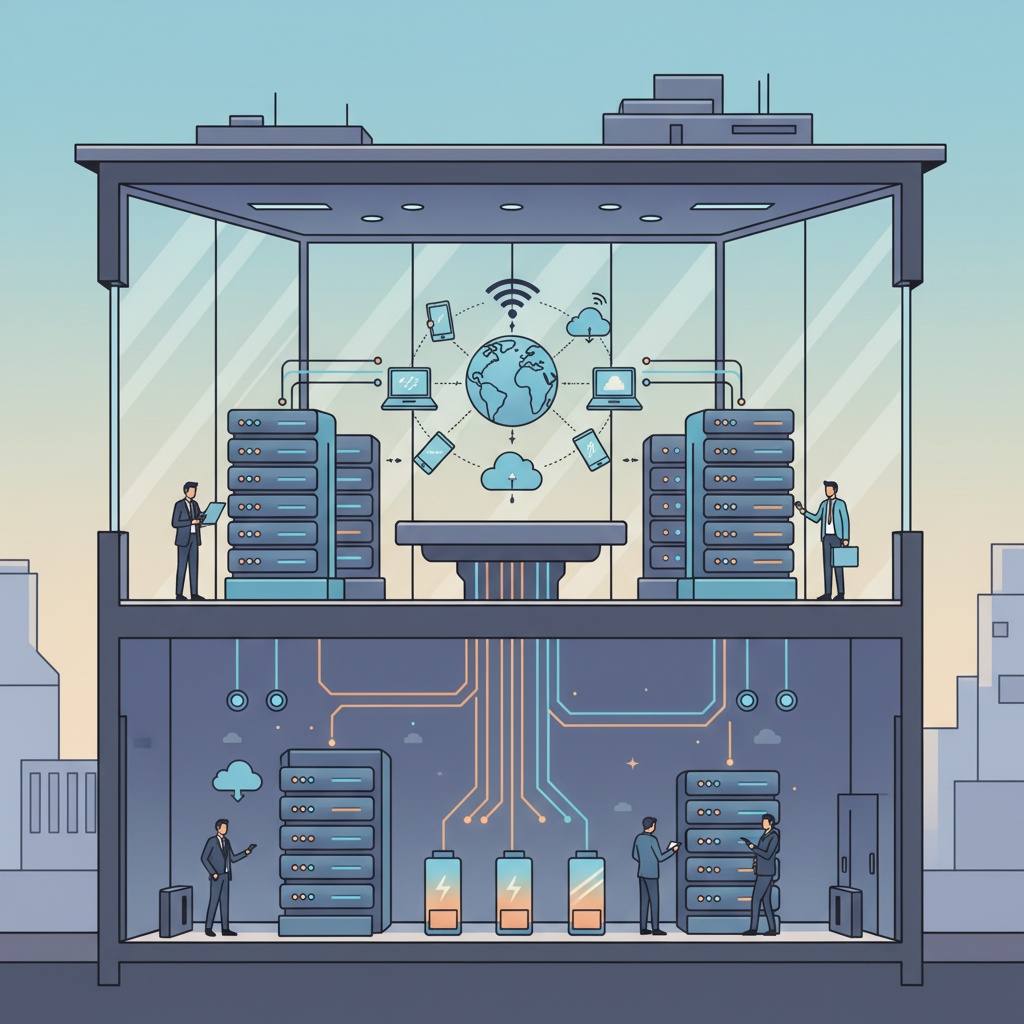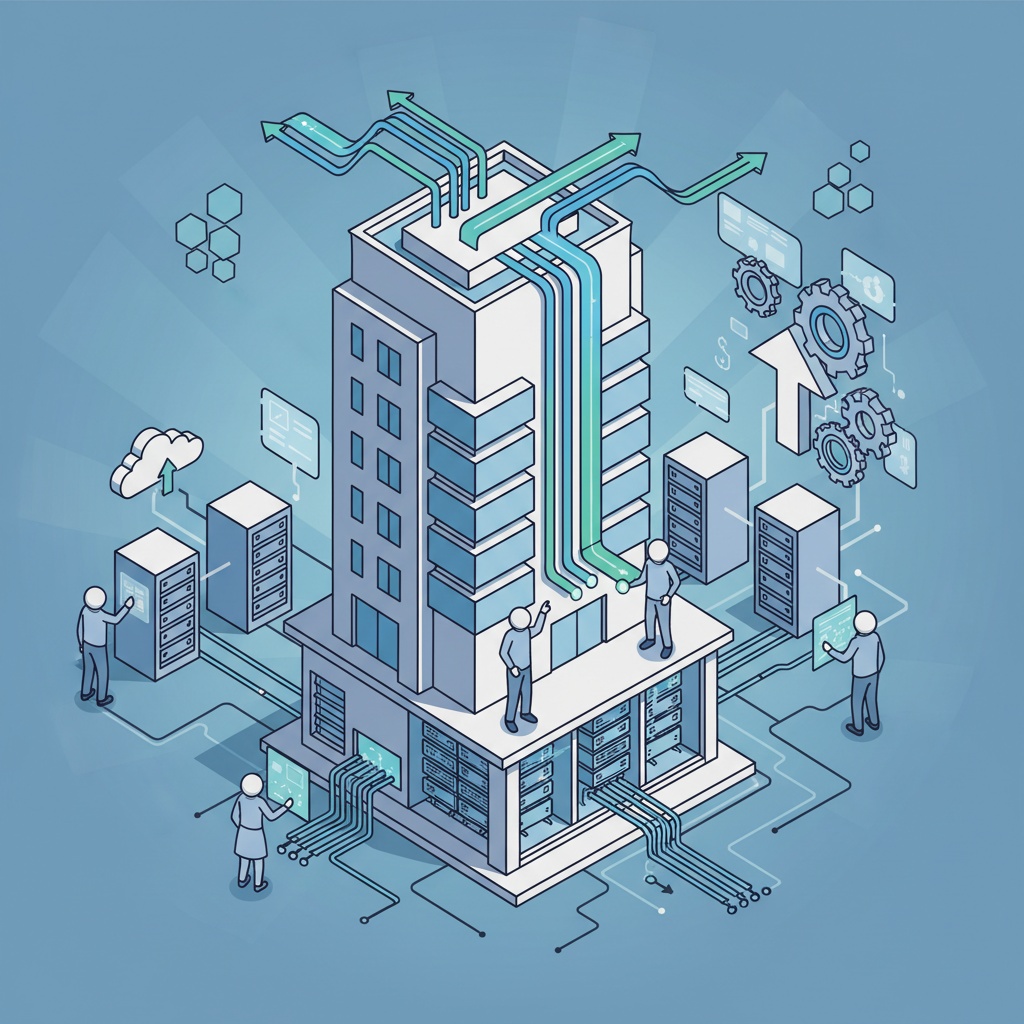
5G infrastructure buildout supporting IoT and business connectivity
5G Infrastructure Buildout: Powering the Next Wave of IoT and Business Connectivity
Reading time: 12 minutes
Ever wondered why your business seems stuck in the digital slow lane while competitors race ahead? The answer might be simpler than you think: 5G infrastructure. This isn’t just another tech upgrade—it’s the foundation that’s redefining how businesses connect, compete, and scale in the modern economy.
Let’s cut through the hype and explore what 5G infrastructure really means for your business, your IoT deployments, and your competitive positioning in an increasingly connected marketplace.
Table of Contents
- Understanding 5G: Beyond the Marketing Buzzwords
- Core Infrastructure Components Driving the Rollout
- How 5G Transforms IoT Deployment and Scale
- Real-World Business Applications and Use Cases
- Navigating Deployment Challenges and Solutions
- Investment and ROI Considerations
- Frequently Asked Questions
- Your 5G Strategy Roadmap
Understanding 5G: Beyond the Marketing Buzzwords
Well, here’s the straight talk: 5G isn’t just “faster 4G.” It’s a fundamental architectural shift that enables three critical capabilities most businesses desperately need but couldn’t previously access at scale.
The Three Pillars of 5G Performance
Enhanced Mobile Broadband (eMBB) delivers speeds up to 20 Gbps—that’s roughly 100 times faster than 4G. But speed alone isn’t the game-changer. It’s what this speed enables: real-time data processing, seamless cloud integration, and bandwidth-intensive applications running simultaneously without degradation.
Ultra-Reliable Low Latency Communications (URLLC) reduces latency to as low as 1 millisecond. For context, human reaction time averages 200-300 milliseconds. This near-instantaneous communication makes mission-critical applications like autonomous vehicles, remote surgery, and industrial automation genuinely viable.
Massive Machine-Type Communications (mMTC) supports up to 1 million connected devices per square kilometer. This density transforms IoT from a niche application to a ubiquitous business intelligence layer across entire operations, cities, and supply chains.
5G vs. 4G: Performance Comparison
20 Gbps (5G)
1 Gbps (4G)
1ms (5G)
50ms (4G)
1M devices/km² (5G)
100K devices/km² (4G)
Why Traditional Infrastructure Can’t Keep Up
Quick Scenario: Imagine managing a smart warehouse with 50,000 sensors monitoring inventory, temperature, movement, and equipment status. On 4G, you’d face constant connectivity bottlenecks, delayed data updates, and network congestion that cripples real-time decision-making. Your $5 million automation investment becomes a liability rather than an asset.
This isn’t hypothetical. According to Ericsson’s 2023 Mobility Report, global IoT connections reached 14.3 billion devices, with projections hitting 34.7 billion by 2030. Traditional infrastructure simply cannot support this exponential growth while maintaining reliability and performance.
Core Infrastructure Components Driving the Rollout
Small Cells: The Hidden Backbone
Unlike 4G’s reliance on large cell towers covering broad areas, 5G requires a dense network of small cells—compact radio equipment installed on streetlights, building facades, and utility poles. Each small cell covers roughly 10-300 meters, creating a mesh network that delivers consistent high-speed connectivity.
The telecommunications industry plans to deploy over 13 million small cells globally by 2027, according to ABI Research. This represents a fundamental shift in how we think about network architecture: from centralized towers to distributed, localized infrastructure.
Network Slicing: Multiple Networks, One Infrastructure
Here’s where 5G gets genuinely innovative: network slicing allows operators to create multiple virtual networks atop a single physical infrastructure. Think of it as having dedicated highway lanes for different types of traffic—emergency vehicles, commercial trucks, and passenger cars each get optimized routes.
For businesses, this means you can purchase a network slice tailored to your specific needs: ultra-low latency for autonomous robots, high bandwidth for video surveillance, or massive connectivity for sensor networks. Each slice operates independently, ensuring your critical operations never compete for resources with consumer traffic.
Edge Computing Integration
Pro Tip: 5G infrastructure isn’t just about connectivity—it’s intrinsically linked with edge computing deployment. The right preparation isn’t just about network speed; it’s about creating distributed computing architectures that process data where it’s generated.
Edge computing nodes, deployed alongside 5G infrastructure, reduce the need to transmit massive data volumes to centralized cloud servers. For a manufacturing facility generating terabytes of sensor data daily, processing at the edge cuts latency from 100+ milliseconds to under 10 milliseconds while reducing bandwidth costs by 40-60%.
How 5G Transforms IoT Deployment and Scale
From Pilot Projects to Enterprise-Wide Deployments
The IoT industry has struggled with what I call the “pilot project trap”—successful small-scale deployments that fail when scaled enterprise-wide due to connectivity limitations, battery life constraints, and management complexity.
5G solves these fundamental barriers through:
- Extended Battery Life: 5G’s power-saving modes enable IoT devices to operate for 10+ years on a single battery, eliminating the maintenance nightmare of managing thousands of battery replacements annually.
- Simplified Device Management: Network-based device management reduces the need for complex on-device software, lowering costs and improving security.
- Reliable Coverage: Enhanced signal penetration reaches previously inaccessible locations like underground facilities, dense urban environments, and rural areas.
Real-World Case Study: Port of Rotterdam
The Port of Rotterdam, Europe’s largest seaport, deployed a private 5G network across its 42-square-kilometer facility. The infrastructure supports 85,000 IoT sensors monitoring container movements, environmental conditions, and equipment status in real-time.
Results within the first 18 months:
- Container throughput increased by 23%
- Equipment downtime reduced by 35% through predictive maintenance
- Carbon emissions decreased by 18% through optimized routing and idle time reduction
- ROI achieved in 14 months, six months ahead of projections
As Marcel Huizing, CIO of the Port of Rotterdam, noted: “5G didn’t just improve our existing operations—it enabled entirely new business models we couldn’t previously consider. We’re now offering data-as-a-service to shipping companies, creating a new revenue stream worth €12 million annually.”
Real-World Business Applications and Use Cases
| Industry | Application | Key Benefit | Typical ROI Timeline |
|---|---|---|---|
| Manufacturing | Automated Quality Inspection | 98% defect detection accuracy | 12-18 months |
| Healthcare | Remote Patient Monitoring | 40% reduction in readmissions | 8-12 months |
| Logistics | Real-Time Asset Tracking | 30% improvement in utilization | 6-10 months |
| Retail | Smart Inventory Management | 25% reduction in stockouts | 10-14 months |
| Agriculture | Precision Farming | 20% water conservation | 18-24 months |
Manufacturing: The Smart Factory Revolution
BMW’s Regensburg plant in Germany deployed a private 5G network across its 5.4-million-square-foot facility, connecting over 3,000 automated guided vehicles (AGVs), robotic systems, and quality control cameras.
The transformation was dramatic: production flexibility increased by 40%, allowing rapid line reconfiguration for different vehicle models. Time-to-market for new models decreased from 24 months to 16 months. Most importantly, the plant achieved a 15% productivity increase while reducing defects by 25%.
Healthcare: Connected Care Ecosystems
Mount Sinai Health System in New York implemented 5G infrastructure across seven hospitals, enabling continuous monitoring of 12,000+ high-risk patients. Wearable devices transmit real-time vital signs, allowing clinical teams to intervene before conditions deteriorate.
The system processes over 2 billion data points monthly, with AI algorithms identifying patterns invisible to human clinicians. Hospital readmissions dropped by 38%, while patient satisfaction scores increased from 72% to 89%.
Navigating Deployment Challenges and Solutions
Challenge #1: Infrastructure Investment Costs
The elephant in the room: 5G infrastructure is expensive. Deploying a private 5G network for a mid-sized facility costs between $500,000 and $2 million, depending on coverage area and requirements.
Solution Strategy: Start with hybrid approaches. Deploy 5G in high-value areas—production lines, warehouses, critical operations—while maintaining 4G or Wi-Fi elsewhere. This phased approach reduces initial investment by 40-60% while delivering immediate ROI in targeted areas. As business value demonstrates itself, expansion becomes self-funding.
Challenge #2: Spectrum Availability and Licensing
5G operates across multiple frequency bands, each requiring appropriate licensing. In the United States, the Citizens Broadband Radio Service (CBRS) offers accessible mid-band spectrum, but navigating regulatory requirements remains complex.
Solution Strategy: Partner with established carriers offering private network services. Verizon, AT&T, and T-Mobile now provide managed private 5G networks, handling spectrum licensing, equipment deployment, and ongoing management. While more expensive than self-deployment, this approach eliminates regulatory complexity and accelerates time-to-value.
Challenge #3: Integration with Legacy Systems
Well, here’s the reality: Most businesses operate on technology infrastructure spanning decades. Your shiny new 5G network needs to communicate with 15-year-old SCADA systems, legacy databases, and proprietary protocols.
Solution Strategy: Implement edge translation layers—middleware that bridges 5G-connected modern devices with legacy systems. Companies like Cradlepoint and Nokia provide industrial-grade edge solutions specifically designed for this integration challenge. Budget 25-30% of your 5G deployment costs for integration and middleware—this isn’t optional; it’s critical for success.
Investment and ROI Considerations
Total Cost of Ownership Breakdown
Understanding true 5G costs requires looking beyond initial infrastructure investment:
- Infrastructure Hardware: 40-45% of total costs (antennas, radios, core network equipment)
- Installation and Integration: 20-25% (deployment labor, site preparation, system integration)
- Spectrum Licensing: 5-10% (varies dramatically by geography and spectrum band)
- Ongoing Management: 15-20% (monitoring, maintenance, upgrades, optimization)
- Security and Compliance: 5-10% (encryption, access control, regulatory compliance)
Calculating Business Value
Pro Tip: ROI calculations should focus on business outcomes, not technology metrics. Don’t measure success by network speed—measure by production increases, downtime reductions, and revenue growth enabled by 5G capabilities.
Practical ROI calculation framework:
- Identify Baseline Metrics: Current production rates, defect percentages, equipment utilization, labor hours per unit
- Project Conservative Improvements: Use industry benchmarks but reduce by 30% to account for implementation challenges
- Calculate Annual Value: Multiply improvements by financial impact per unit improvement
- Factor Implementation Timeline: Most deployments reach full capability in 12-18 months, not immediately
- Include Hidden Benefits: Improved safety, regulatory compliance, employee satisfaction, customer experience
Case Study: Global Beverage Manufacturer
A Fortune 500 beverage company deployed 5G across 12 bottling facilities, investing $8.4 million over 18 months. Their detailed ROI tracking revealed:
Year 1 Results:
- Production efficiency: +12% ($4.2M annual value)
- Unplanned downtime: -28% ($2.8M annual value)
- Quality defects: -35% ($1.9M annual value)
- Energy consumption: -15% ($1.2M annual value)
- Total Year 1 Value: $10.1M
- Payback Period: 10 months
Year 3 Cumulative Results:
- Additional new use cases deployed: 17
- Cumulative value delivered: $38.7M
- ROI: 460%
Frequently Asked Questions
How does 5G infrastructure differ from public carrier networks versus private deployments?
Public carrier 5G networks prioritize broad coverage and consumer services, with businesses sharing capacity with millions of other users. Private 5G networks give organizations dedicated spectrum, guaranteed performance, and complete control over security and prioritization. Public networks cost less initially but offer limited customization and no performance guarantees. Private networks require larger upfront investment but deliver predictable performance, enhanced security, and customization for specific business requirements. For mission-critical applications, private deployment is typically worth the premium; for general connectivity needs, public networks suffice.
What timeline should businesses expect for full 5G infrastructure deployment?
Realistic deployment timelines vary significantly by scope and complexity. A small facility (50,000 sq ft) with straightforward requirements can achieve operational status in 3-6 months. Medium enterprises with multiple buildings or complex requirements should expect 6-12 months. Large-scale deployments across multiple facilities typically require 12-24 months for complete implementation. However, phased deployments allow businesses to realize value incrementally—many organizations achieve initial ROI within the first 3-6 months by prioritizing high-value use cases, then expanding systematically.
Can existing IoT devices work with 5G networks, or do they require replacement?
This depends on the devices and protocols involved. Legacy IoT devices using 2G/3G connectivity require replacement, as these networks are being decommissioned. Devices using 4G LTE typically continue functioning on 5G networks through backward compatibility. However, to leverage 5G’s advanced capabilities—ultra-low latency, network slicing, enhanced device density—new 5G-native devices are necessary. Most organizations adopt a hybrid approach: maintaining functional legacy devices while gradually transitioning to 5G-capable hardware as equipment reaches end-of-life or new capabilities justify replacement costs.
Your 5G Strategy Roadmap
Ready to transform connectivity challenges into competitive advantages? Here’s your practical action plan for the next 6-12 months:
Immediate Actions (Next 30 Days):
- Audit current connectivity infrastructure—identify bottlenecks, coverage gaps, and performance limitations impacting business operations
- Map high-value use cases where 5G capabilities directly solve existing problems or enable new opportunities
- Engage with 2-3 potential vendors (carriers, private network providers, systems integrators) to understand options, costs, and timelines specific to your situation
Planning Phase (30-90 Days):
- Develop a phased deployment strategy prioritizing areas with clearest ROI and manageable complexity
- Create detailed financial models including TCO, projected benefits, and realistic ROI timelines
- Assemble cross-functional teams spanning IT, operations, finance, and relevant business units
- Conduct pilot project in controlled environment to validate assumptions and build organizational capability
Execution Phase (90 Days+):
- Begin phased deployment starting with highest-value areas
- Establish measurement frameworks tracking both technical performance and business outcomes
- Build internal expertise through training, documentation, and knowledge transfer
- Plan expansion roadmap based on lessons learned and demonstrated value
The 5G infrastructure buildout represents more than technological evolution—it’s the foundation for the next decade of business innovation. Organizations that strategically deploy 5G infrastructure today position themselves to leverage emerging technologies like AI, digital twins, and autonomous systems that require this connectivity backbone.
Your strategic question isn’t whether to adopt 5G infrastructure, but how quickly you can implement it before competitors gain insurmountable advantages.
Where will you begin your 5G journey? What business challenge will you solve first? The infrastructure is ready, the technology is proven, and the competitive advantage awaits those prepared to act strategically.